Petter Solberg
Three titles, a thousand wheelies, and a paddock that loved to hate him.

via Wikipedia: Petter Solberg · see source
Petter Solberg is a Norwegian rally driver whose career in the World Rally Championship spanned more than a decade and made him one of the most beloved and polarising figures in the sport's modern era. A three-time World Rally Champion (2005 with Subaru, 2010 with Citroën, 2014 with Volkswagen), Solberg is remembered not only for his titles but for the ferociously attacking, wheel-spinning, barrier-testing style that made every one of his stages a spectacle. In the paddock, he became a shorthand for the 'fan's driver'—the one you root for not because he is the fastest, but because he makes the car look like it is trying to kill the road. His role in WRC culture extends well beyond the results sheet. Solberg personified the Scandinavian rally identity: raw pace, a willingness to take risks that would make a team principal's blood pressure spike, and an unapologetic public persona. For fans, watching a Solberg stage was an event unto itself.
- Nationality
- Norwegian
- WRC World Championships
- 3 (2005, 2010, 2014)
- Factory Teams
- Subaru, Citroën, Volkswagen (among others)
- Long-time Co-driver
- Ilka Minor
- Driving Style
- Aggressive, high-pace, risk-taking
- Peak Era
- 2004–2014
- Status
- Retired from full-time WRC competition
Verified Timeline
Lore & Background
Solberg arrived in the WRC paddock in the early 2000s as the son of Stig Solberg, a respected Norwegian rally driver, and quickly announced that he intended to do things his own way. His early years with Subaru in 2004 and 2005 saw him transform the Impreza WRC from a reliable but unexciting machine into a weapon of mass entertainment. The 2005 title, clinched in a dramatic final round, was less a coronation of consistency than a celebration of sheer pace: Solberg could be two seconds off the pace on a steady stage and then post the fastest time on the next one simply because he decided to go for it. The Citroën years (2006–2010) deepened his legend and his rivalries. His battles with Sébastien Loeb became the defining narrative of that era—Loeb the metronome, Solberg the storm. Solberg's 2010 title, earned in a season where he was often faster on individual stages but lost points in the chaos of full weekends, cemented the idea that he was the driver the sport needed to keep itself honest. The Volkswagen period brought a third title in 2014, this time in the all-wheel-drive era, proving that his attacking instincts translated to a completely different car philosophy. Beyond the results, Solberg's cultural footprint is enormous. He was the driver who made the Norwegian public feel that the WRC belonged to them, who turned every press conference into a small performance, and who treated the barriers as a suggestion rather than a boundary. In the paddock, he was the driver other crews watched to see how far they could push their own limits. His legacy is that of a man who made rally racing feel dangerous, personal, and alive in a way that pure efficiency never could.
In Their Own Story
The stage was C17, a narrow single-track through the forests outside Jyväskylä, and the gravel was already slick from a morning rain. Solberg's Subaru Impreza came around the hairpin at a speed that made the co-driver's notes sound like a warning rather than a guide. He was two car-lengths ahead of the time-cut, the rear wheels spinning in a long, controlled drift that kicked a spray of mud across the white line. The crowd on the ridge—maybe forty people, maybe forty thousand in the collective imagination of every Norwegian watching on TV—roared. He was not fastest. He was not even second. But for those three seconds of sideways, the whole forest held its breath, and the paddock knew: this was the reason they came.
Reader's Guide
The Norwegian rally identity is inseparable from the Solberg name. In Norway, WRC is not a niche motorsport; it is a national conversation. Every round of the WRC calendar that passes through Scandinavian forests—Rally Sweden, Rally Finland, even the tarmac stages of Rally Germany—draws a Norwegian audience that treats the event with the same communal intensity as a football final. Families gather around a single television, the co-driver's notes are shouted along with, and a Solberg wheelie on stage triggers a roar that shakes the glass. In the paddock itself, Solberg's presence created a specific energy. He was the driver who would lean over the bonnet of his car in the service park, arms crossed, watching the next car go through the stage with an expression that was equal parts contempt and admiration. He treated the media pen not as a formality but as a stage of its own—outspoken, sometimes combative, always entertaining. Team principals learned to schedule his press conferences with extra time, because he would not take three questions and leave. The broader WRC culture absorbed the 'Solberg standard': the idea that a driver's job is not merely to finish but to make the car look like it is fighting the road. Young drivers in the junior categories still talk about 'driving like Solberg' as both a compliment and a warning to their team managers. The paddock ritual of the 'Solberg stage'—where crews deliberately slow their pace to watch him fly past—became an unwritten tradition at several rallies, a small act of collective reverence for the driver who made the sport feel like a dare. In service parks, the Norwegian contingent has always had its own rhythm: quieter than the French, less corporate than the German, but fiercely loyal. A Solberg car in the paddock meant a cluster of Norwegian fans with flags, a smell of thermos coffee, and a low, persistent hum of conversation that never quite reached the volume of the Italian or French camps but never stopped either.
Did You Know?
- Petter Solberg is one of the very few drivers to win the WRC World Championship in three different eras of car regulation: the 4WD Impreza era (2005), the 2WD Citroën era (2010), and the modern 4WD Volkswagen era (2014).
- His long-time co-driver Ilka Minor was one of the very few women to serve as a full-time WRC co-driver at the highest level, and their partnership spanned multiple seasons and teams.
- Solberg's father, Stig Solberg, was himself a rally driver, and the father-son connection made the Solberg name a symbol of Norwegian motorsport heritage for two generations.
- His aggressive driving style earned him a reputation in the paddock as the driver most likely to be involved in a spectacular crash—and also the most likely to be the first one back in the car the next stage.
From the Family Farm to Norwegian Champion
Petter Solberg's journey into motorsport was forged in the soil of his family's Norwegian farm, where his parents Tove and Terje were passionate bilcross competitors and rallycross enthusiasts. As a young boy too small to sit behind a wheel, he spent his time helping rebuild their competition cars, absorbing the mechanics and culture of racing by osmosis. His first formal taste of victory came in 1987, when at just thirteen he claimed the Norwegian Tamiya Cup for radio-controlled cars. Three days after turning eighteen in 1992, and only a single day after receiving his driving licence, he threw himself into his first bilcross event. The results were immediate and dominant: by 1995 he had captured both the Norwegian rallycross and hillclimb championships, winning nineteen of twenty-one hillclimb events, and in 1996 he repeated the feat with fifteen of nineteen victories. That same year he also took part in his maiden proper rally, the Norwegian Rally Bjørkelangen, piloting a Volvo 240 in the Original class alongside a Swedish co-driver named Maud. By 1998, Solberg had claimed the Norwegian Rally Championship, establishing himself as a force to be reckoned with on home soil before the world took notice.
Conquering the World Rally Championship
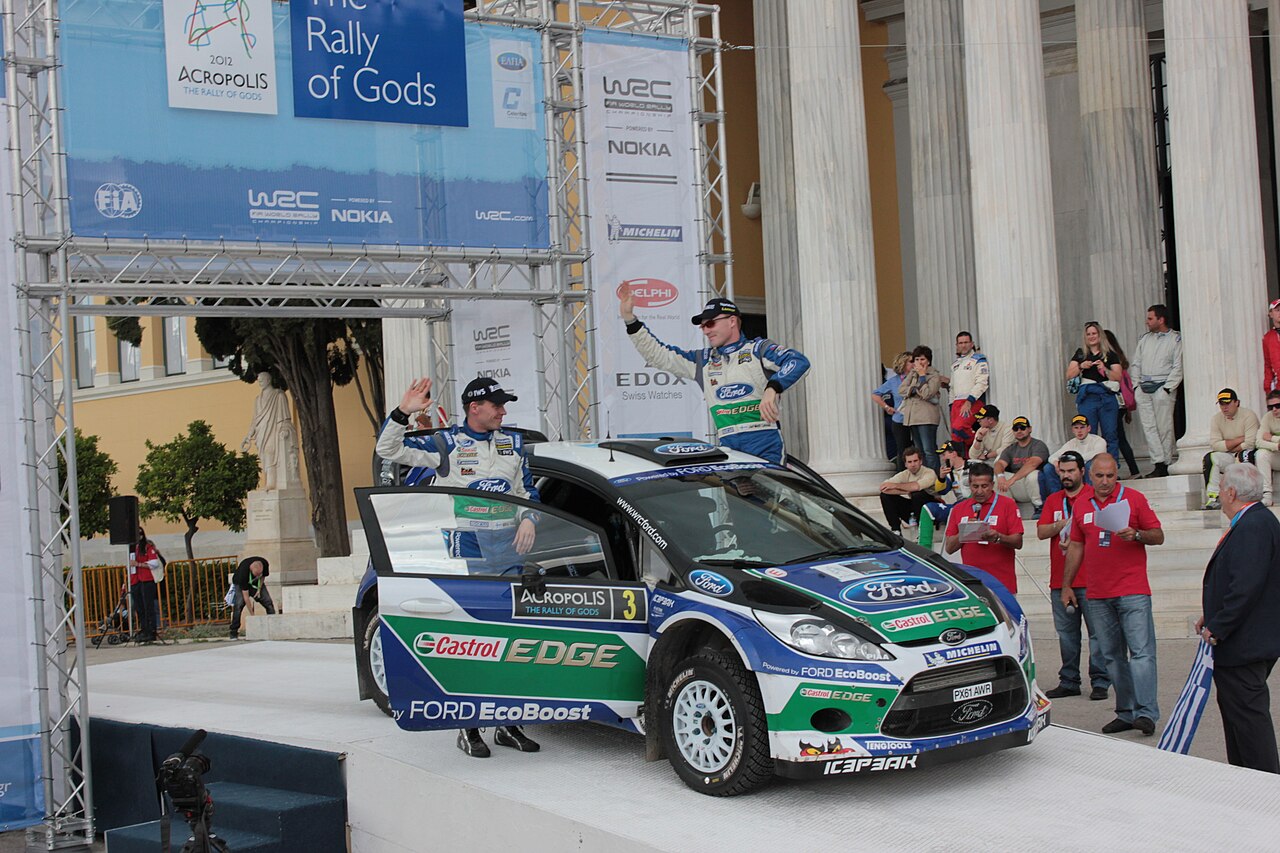
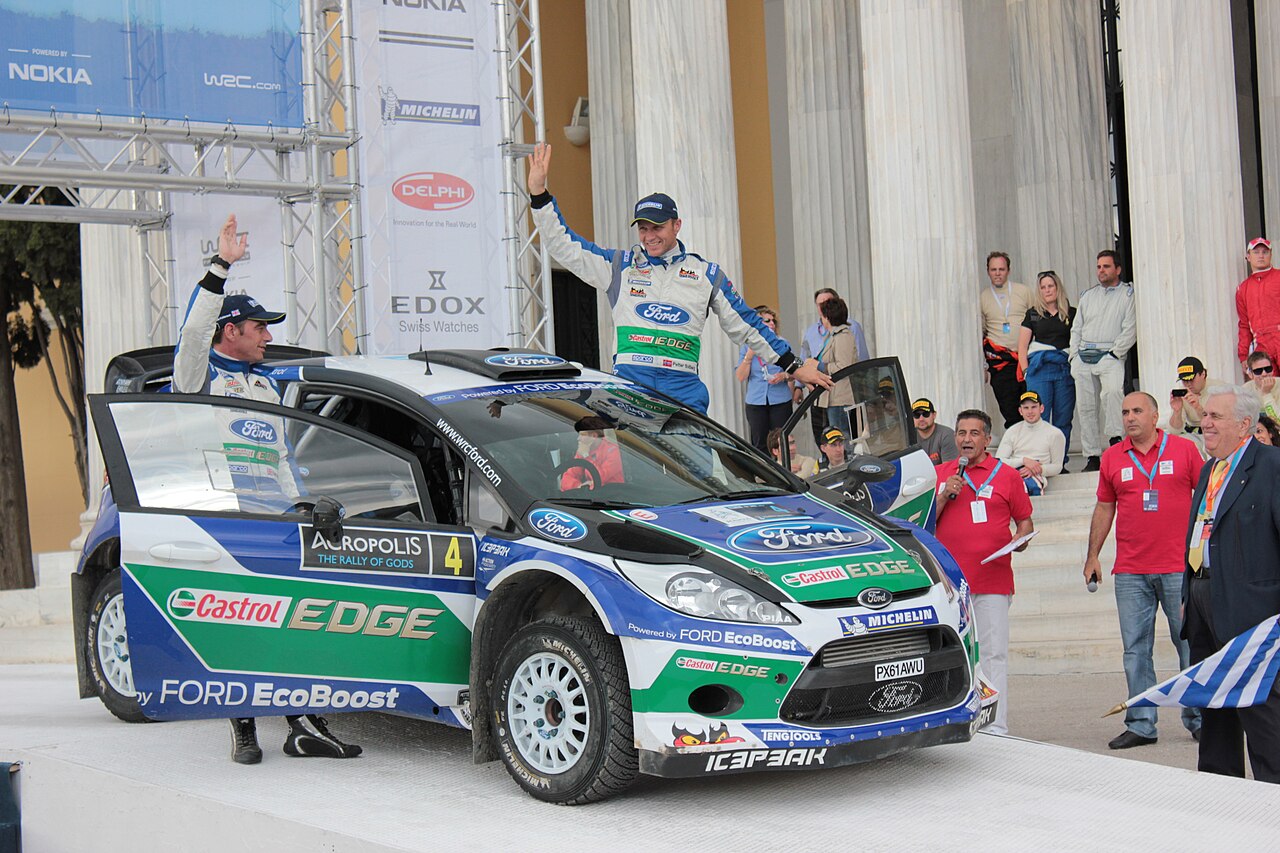
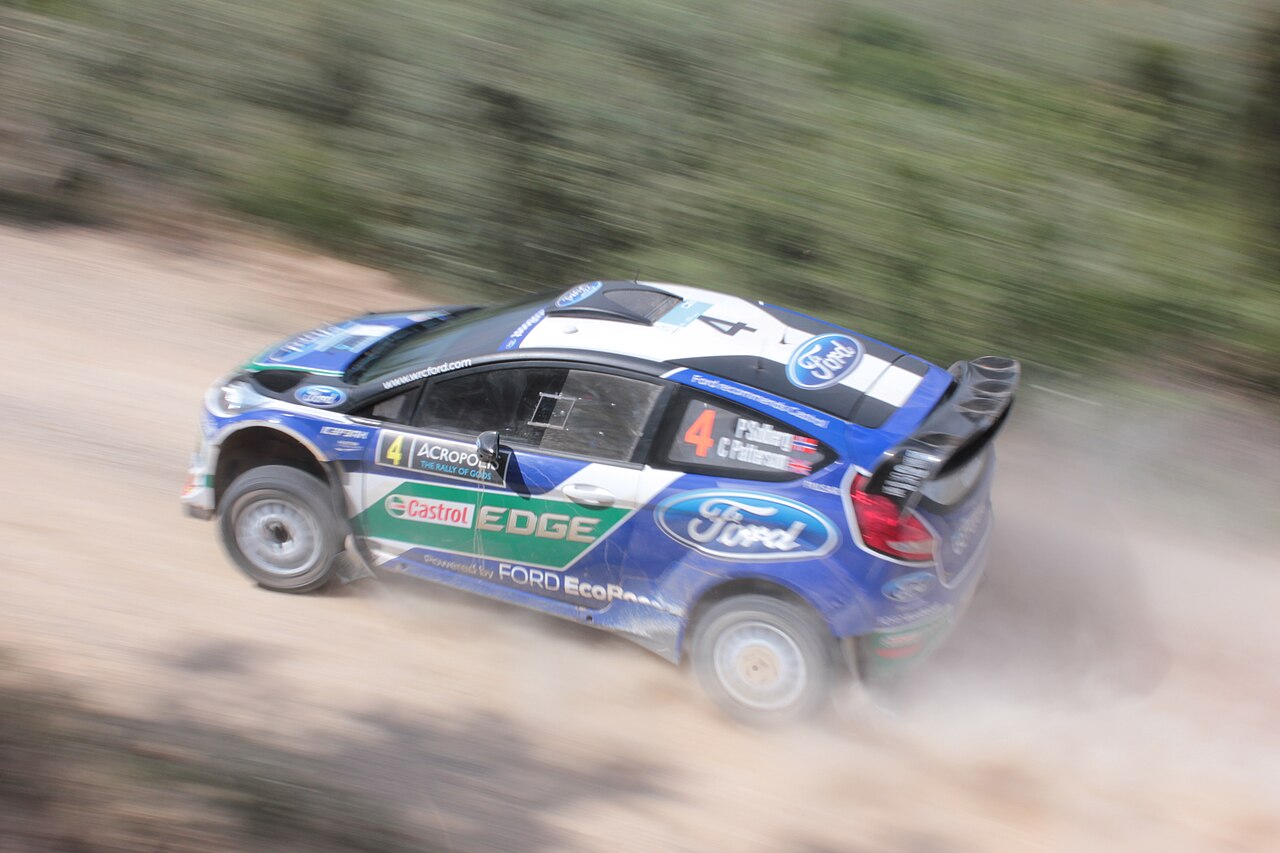
Petter Solberg first stepped into the World Rally Championship in 1998, and by the end of that year he had earned a three-year junior deal with Ford's M-Sport outfit. His breakthrough came at the punishing 1999 Safari Rally, where an injury to the team's regular understudy thrust him into the lineup; he stunned observers by finishing fifth and scoring points for both driver and manufacturer. In 2000 he departed Ford early due to a contractual shortfall and joined the Subaru World Rally Team, where his career truly took flight. After a selfless 2001 season in which he deliberately yielded points to help his senior teammate Richard Burns chase the title, Solberg claimed his first WRC victory at the 2002 Wales Rally GB. The following year he became the first Norwegian ever to win the drivers' world championship, edging Sébastien Loeb at that same Welsh event. Yet the next two seasons saw him finish as runner-up to the increasingly dominant Loeb. After Subaru pulled out of the WRC following 2008, Solberg bankrolled his own private entry with Citroën machinery before ultimately returning to Ford's factory team in 2012, a full twelve years after his initial debut with them.
Rallycross Champion and Team Architect
When Solberg pivoted to rallycross for the 2013 season, he was already a proven world champion, but the new discipline demanded a different kind of aggression and adaptability. In 2014 he delivered the inaugural FIA World Rallycross Championship title, backing it up with five race victories and nine podium finishes across the season. He defended that crown the following year, cementing his status as the sport's benchmark driver. Rather than simply collecting individual titles, Solberg then moved into the role of team builder. In 2017 he launched the PSRX Volkswagen Sweden operation in partnership with Volkswagen Motorsport, and the project immediately proved competitive, claiming the Team's Championship in both 2017 and 2018. His retirement from full-time competition came after that second team title, marking the close of a career that had spanned two distinct disciplines at the highest level. The "Mr. Hollywood" moniker that followed him throughout his career reflected not just his flair on the road but his ability to reinvent himself and build something lasting beyond his own driving seat.
A Dynasty of Speed
The Solberg name in motorsport is inseparable from family. Petter's parents, Tove and Terje, were dedicated bilcross competitors who instilled in their sons a lifelong obsession with competition cars, while his older brother Henning went on to win the Norwegian Rally Championship five consecutive times between 1999 and 2003. Petter's own 1998 national title and his historic 2003 WRC drivers' championship made him the first Norwegian to claim that global honour, a milestone that still defines his legacy. The thread of family competition continues into the next generation: his son Oliver Solberg has followed the same path as a professional rally driver, and father and son have regularly shared the grid at the Race of Champions, a spectacle that underscores how deeply racing runs in their blood. From a thirteen-year-old winning a Tamiya Cup on the family farm to a world champion watching his own son chase the same dreams, the Solberg story is one of generational passion, a lineage of speed that stretches across three decades and two countries.
Gallery
More in Paddock & Rally Culture
Related in World Rally Championship
Links follow this subject's own source article.
Elsewhere in the World Rally Championship universe
Spotted an error? Know more?
This is a living reference — every entry is fact-audited, and reader corrections feed straight into our audit queue. Suggest an edit · See this site's audit record