Rallye Monte-Carlo
Where the mountains write the script and no two stages ever play the same way.

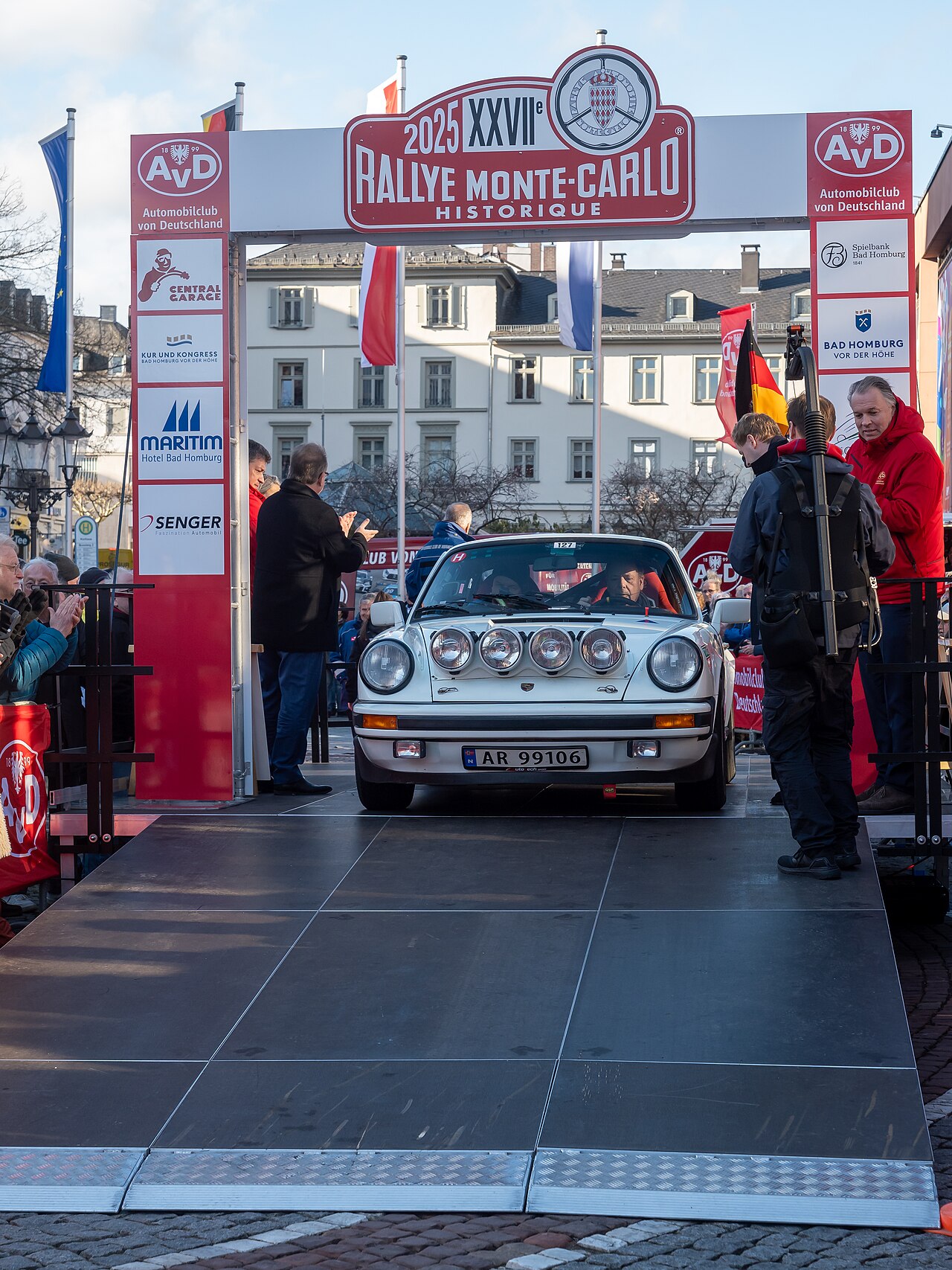
Matti Blume · CC BY-SA 4.0
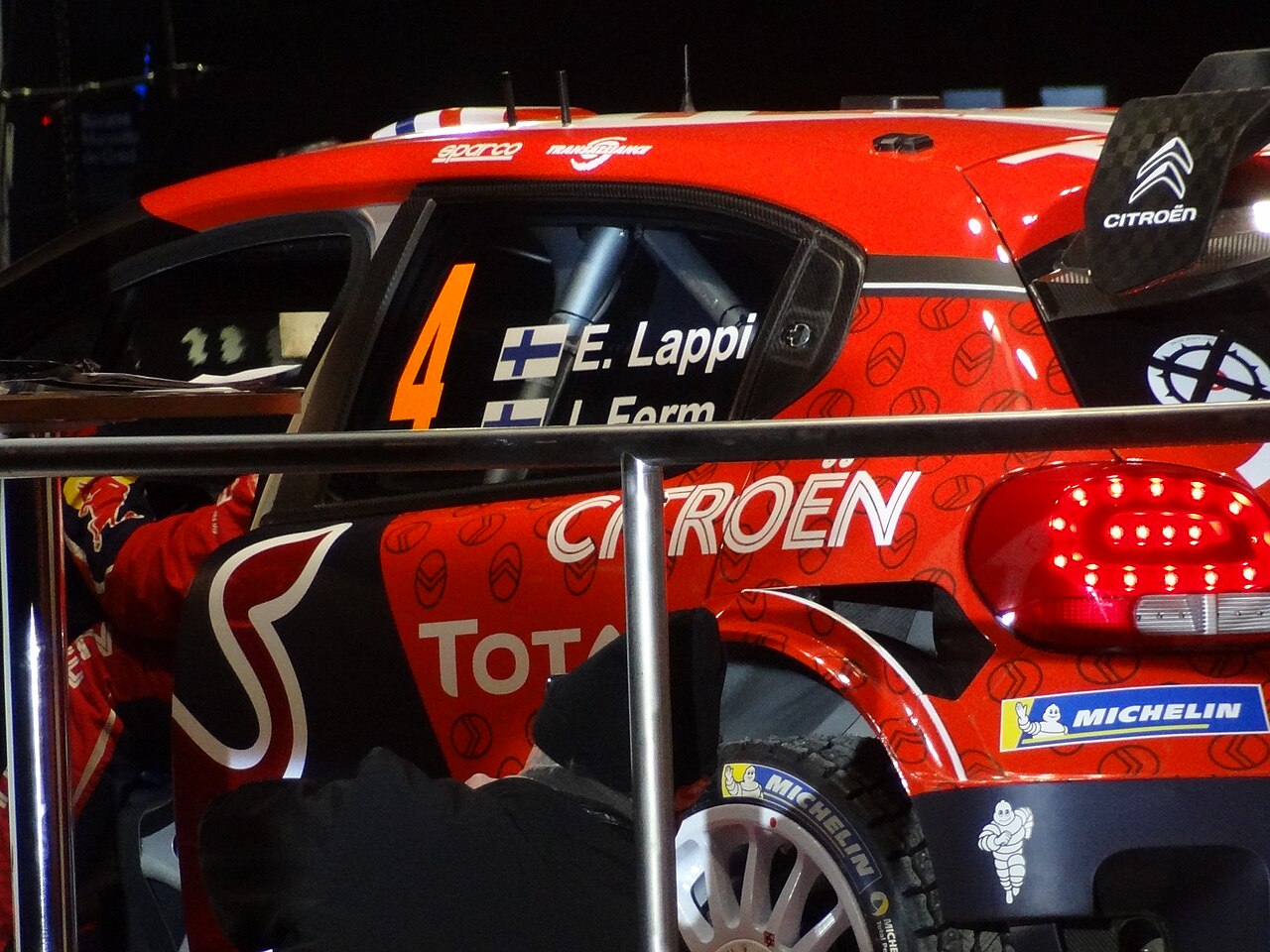
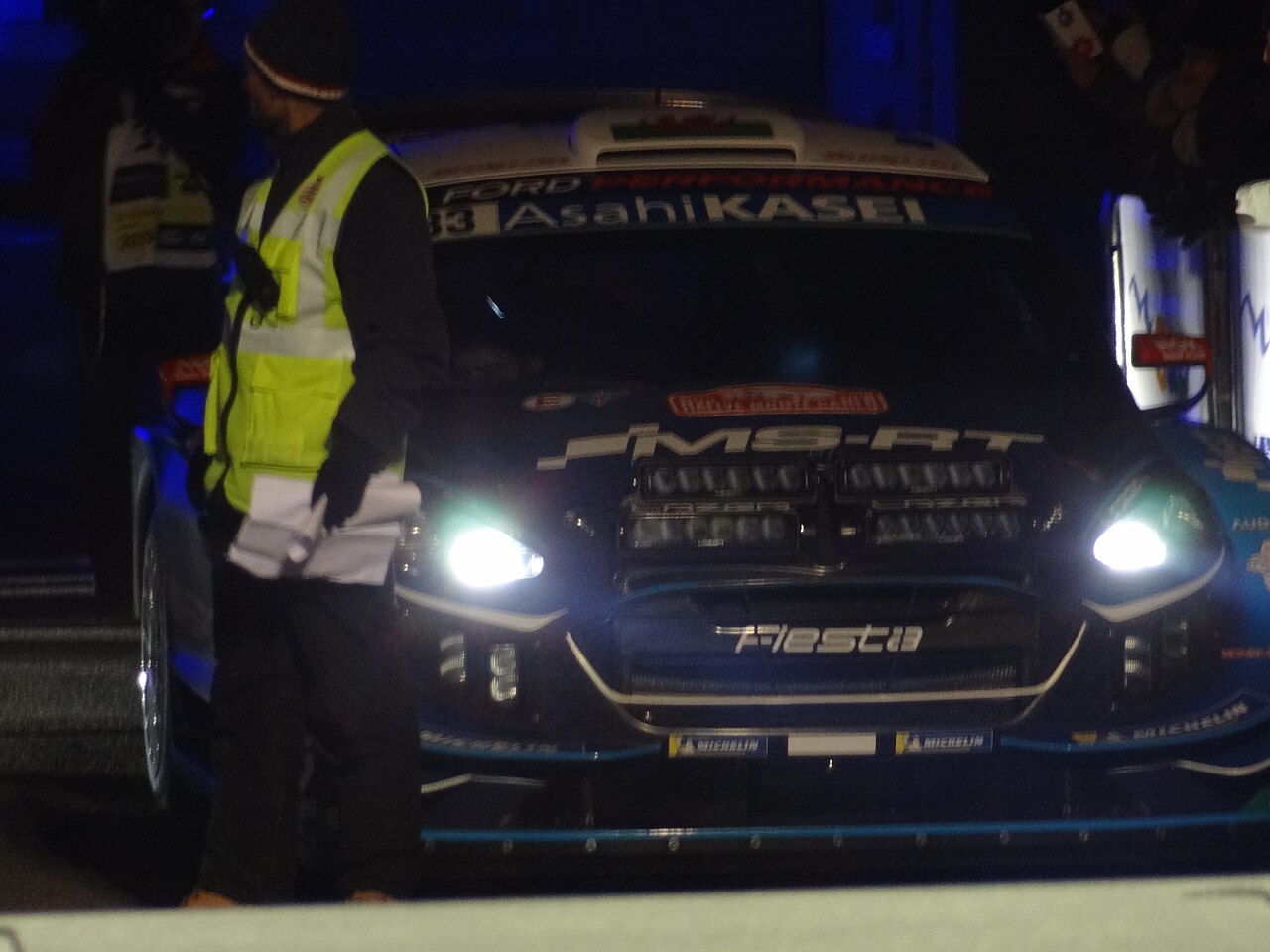
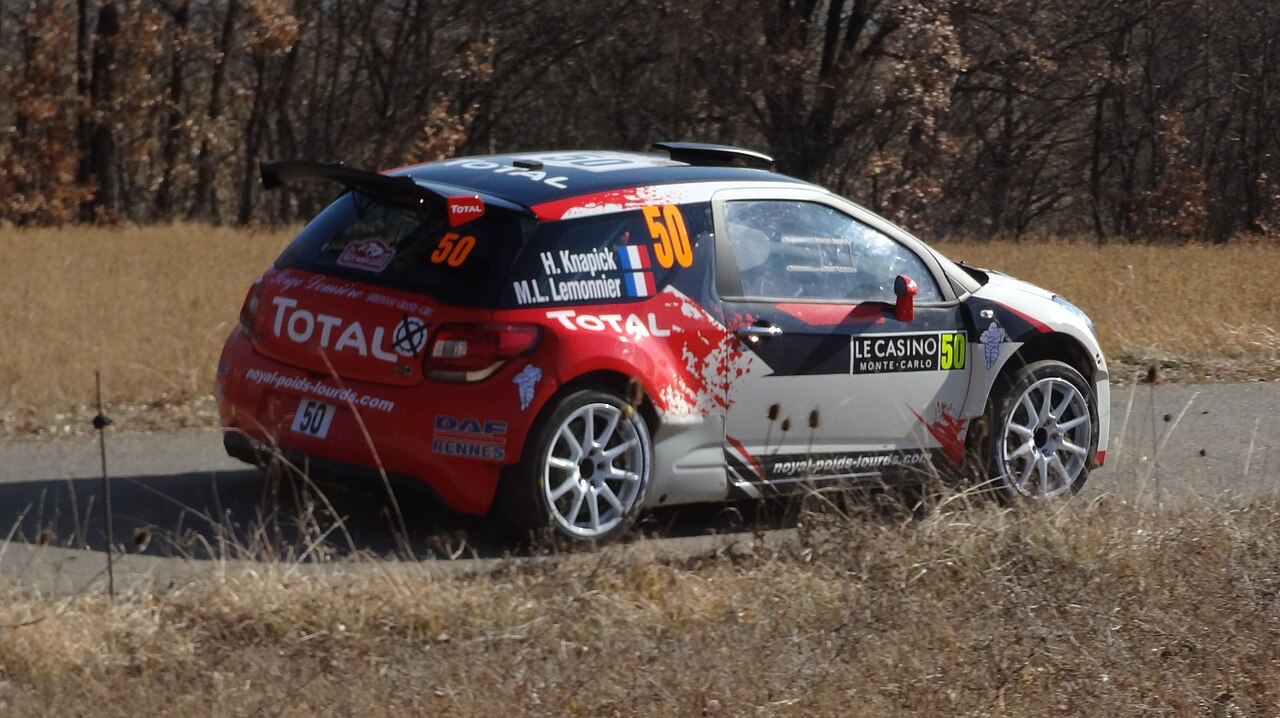
The Monte Carlo Rally (officially Rallye Automobile Monte-Carlo) is a rallying event organized each year by the Automobile Club de Monaco. From its inception in 1911 by Prince Albert I, the rally was intended to demonstrate improvements and innovations in automobiles, and promote Monaco as a tourist resort on the Mediterranean shore. The rally now takes place along the hills of the French Riviera and southeast France (Provence-Alpes-Côte d'Azur and the southern parts of Auvergne-Rhône-Alpes). In 2026, for the first time since the 2008 Monte Carlo Rally, the event returned to within the borders of Monaco for a Super Special Stage.
- First held
- 1911
- WRC season opener
- Since 1973
- Primary terrain
- Mixed – snow, ice, tarmac
- Region
- French Riviera and southeast France (Provence-Alpes-Côte d'Azur and the southern
- Status
- Active – annual WRC round
Verified Timeline
Lore & Background
The Monte Carlo Rally was born in 1911 when 23 cars set out from 11 different locations across Europe to converge on Monte Carlo. Henri Rougier won the first event in a Turcat-Méry 25 Hp, after a route of 1,020 kilometres from Paris. The early rally comprised both driving and somewhat arbitrary judging based on the elegance of the car, passenger comfort and the condition in which it arrived in the principality. The outcry of scandal when the results were published changed nothing, so Rougier was proclaimed the first winner. The 1966 event was the most controversial in the history of the Rally. The top four finishers—Timo Mäkinen, Rauno Aaltonen, Paddy Hopkirk, and a fourth Mini driver (all in Mini-Coopers)—were all disqualified because they used non-dipping single filament quartz iodine bulbs in their headlamps. This elevated Pauli Toivonen (Citroën ID) into first place overall. Toivonen himself found the situation so embarrassing that he refused to accept his award. The headline in Motor Sport read "The Monte Carlo Fiasco". The rally features one of the most famous special stages in the world: the Col de Turini. This 31 km route passes over a mountain pass road which normally has ice and/or snow on sections of it. The Turini is also driven at night, with thousands of fans watching the "Night of Turini", also known as the "Night of the Long Knives" due to the strong high beam lights cutting through the night.
In Their Own Story
The service park at Gap was white. Not the polite, postcard white of a fresh morning, but the aggressive, horizontal white of a storm that had been building all night. Sébastien wiped the sleet from his visor and watched the co-driver's notes dissolve in the condensation. That was the whole rally in one line. Around him, mechanics were swapping rear wing angles, arguing in French about whether the next stage would be ice or gravel. No one smiled. The mountains were about to decide who got to drive into Monaco and who got to watch from the grandstand.
Reader's Guide
Monte Carlo is the WRC's wild card, the rally that refuses to be tamed. It arrives in January when the rest of the calendar is still a rumour, and it does so with the full, indifferent authority of the Alps. Snow caps the peaks, but the valleys may be dry. A stage that was ice at 08:00 is tarmac at 11:00. The car must be a Swiss army knife: good on snow, sharp on tarmac, forgiving on loose surface. The drama is structural, not incidental. Every team arrives with a gamble – two sets of snow tyres, a tarmac setup, a gravel compromise – and the mountain picks the winner. Co-drivers are reading conditions in real time, calling out changes that can appear without warning. A single misread, a single wrong tyre choice, and the gap to the leader evaporates or inflates within one special stage. The finish at the Casino de Monte-Carlo is theatre. The crowd is packed tight, the cars are still steaming, and the driver who crosses that line has done what no other round demands: survived a full-spectrum winter. It is the round where the season's pecking order is set, where the title fight begins with a bang, and where the name Monte Carlo earns its place as the most unpredictable, most demanding, and most gloriously chaotic event in world rallying.
Did You Know?
- The first Monte Carlo Rally in 1911 had 23 cars setting out from 11 different locations across Europe.
- Henri Rougier won the first rally in a Turcat-Méry 25 Hp after covering 1,020 kilometres from Paris.
- In 1966, the top four finishers were all Mini-Coopers driven by Timo Mäkinen, Rauno Aaltonen, Paddy Hopkirk, and a fourth Mini driver; they were disqualified for using non-dipping single filament quartz iodine bulbs, and
- The Col de Turini stage is 31 km long and passes over a mountain pass road that normally has ice and/or snow at that time of year.
Origins and the Concentration Rally Era
Born from the vision of Prince Albert I of Monaco, the Rallye Monte-Carlo first rolled out in January 1911, when 23 automobiles departed from eleven scattered locations across Europe to converge on the principality. Henri Rougier, piloting a Turcat-Méry 25 Hp, covered a 1,020-kilometre route from Paris to claim the inaugural victory—despite a storm of protest over the judging, which weighed elegance, passenger comfort, and the car's arrival condition alongside pure driving skill. For nearly a century the event kept its defining concentration-rally character, with competitors launching from diverse European cities before tackling special stages near Monaco. After the Second World War, factory-backed teams reshaped the competitive landscape. A dedicated Team prize appeared from 1949, first claimed by three Allards, and later won by Simca, Delahaye, Sunbeam-Talbot, and Jaguar entries. Sydney Allard etched his name in 1952 as the sole driver to win in a car of his own making, while 1953 saw eight factory-prepared Sunbeam-Talbots on the grid alongside a works Ford Zephyr driven by Gatsonides.
The 1966 Fiasco
No Monte Carlo Rally in the annals of the sport has generated more fury than the 1966 edition. The four cars that crossed the line at the front—three Mini-Coopers driven by Timo Mäkinen, Rauno Aaltonen, and Paddy Hopkirk, plus Roger Clark in a Ford Cortina—were all stripped of their positions because their headlamps used non-dipping single-filament quartz iodine bulbs rather than the standard double-filament dipping glass units fitted to the road-going versions of those models. The disqualification catapulted Pauli Toivonen, in a Citroën ID, into the overall victory, a result he found so mortifying that he flatly refused to accept his trophy. Rosemary Smith, who had taken the Coupe des Dames in a Hillman Imp, was also removed from sixth place. In total, ten cars were disqualified, and teams threatened to pull out of the event entirely. The publication Motor Sport captured the mood with a headline that simply read: The Monte Carlo Fiasco.
Col de Turini and the Night of the Long Knives
Few rally stages carry the mythic weight of the Col de Turini. Stretching 31 kilometres between La Bollène-Vésubie and Sospel, the route climbs from an elevation of 479 metres to a peak of 1,603 metres along the D70, averaging a 6.7 percent gradient through a labyrinth of hairpin bends. At that time of year, sections of the pass are routinely glazed with ice or snow, and spectators lining the route add their own layer by hurling handfuls of white powder onto the tarmac. In 2005, that crowd-sourced hazard proved catastrophic: both Marcus Grönholm and Petter Solberg lost a wheel when their cars skidded on spectator-placed snow and slammed into a wall. Grönholm limped home in fifth; Solberg's damage was too severe to continue. That same year, Sébastien Loeb posted 21 minutes 40 seconds, a time that ranks among the fastest ever recorded on the stage in the modern era. The Turini is also run at night, an event fans call the Night of the Long Knives for the way high-beam headlights slice through the darkness. It was absent in 2007 but returned in 2008, and in 2009 and 2010 it was broadcast live on Eurosport.
Championship Cycles and the Tyre Dilemma
The Monte Carlo Rally has cycled through several championship umbrellas over the decades. It anchored the European Rally Championship from 1953 to 1972, skipping only 1968 and 1969, then became the January curtain-raiser for the FIA World Rally Championship from 1973 through 2008. A brief interlude saw it serve as the opening round of the Intercontinental Rally Challenge between 2009 and 2011, before it rejoined the WRC calendar in 2012. The event's unique character is amplified by its geography: even as recently as 1991, drivers could select from roughly five starting venues spread equidistantly around the principality. Because conditions shift dramatically—dry tarmac, wet asphalt, snow, and ice can all appear within a single stage—tyre selection becomes a high-stakes gamble. The compounds that bite into snow and ice typically lose grip on dry tarmac, forcing crews to make a compromise that can define their entire result. To mark the rally's centenary in 2010, the Automobile Club de Monaco chose Glasgow, Barcelona, Warsaw, and Marrakesh as departure points. In 2026, the event will once again include a Super Special Stage within Monaco's borders, a first since 2008.
Gallery
Frequently Asked Questions
Who is Rallye Monte-Carlo?
The Rallye Monte-Carlo is the oldest competitive rally still running on the planet, first staged way back in 1911, and it has served as the ceremonial opening round of the WRC every season since the championship was founded in 1973.
What are Rallye Monte-Carlo's signature conditions?
No other event on the calendar throws deep snow, black ice, bare tarmac, and loose gravel at a crew within the same stage, sometimes within the same few minutes. It is the ultimate test of on-the-fly adaptability, and no other round demands such a wide range of skill in a single weekend.
Where does Rallye Monte-Carlo's story end?
Every year the final stage rolls into the Casino de Monte-Carlo in Monaco, where the podium ceremony takes place on the casino's famous steps. That finish gives the event a level of glamour and pageantry that no other WRC round can match.
Why is Rallye Monte-Carlo important to WRC history?
As the oldest rally still in active competition and the season-opening round since 1973, it carries more heritage than any other event on the grid. It sets the tone for the entire championship and is the one round where the mountains literally write the script and no two stages ever play out the same way.
What region does Rallye Monte-Carlo cover?
The stages stretch across the French Alps and spill into neighbouring countries, taking crews through alpine passes, village roads, and wildly varied surfaces over a single event. That geographic spread is what makes the rally's mixed-terrain challenge so uniquely punishing.
More in Iconic Rallies
Elsewhere in the World Rally Championship universe
Spotted an error? Know more?
This is a living reference — every entry is fact-audited, and reader corrections feed straight into our audit queue. Suggest an edit · See this site's audit record