Ford Fiesta RS WRC
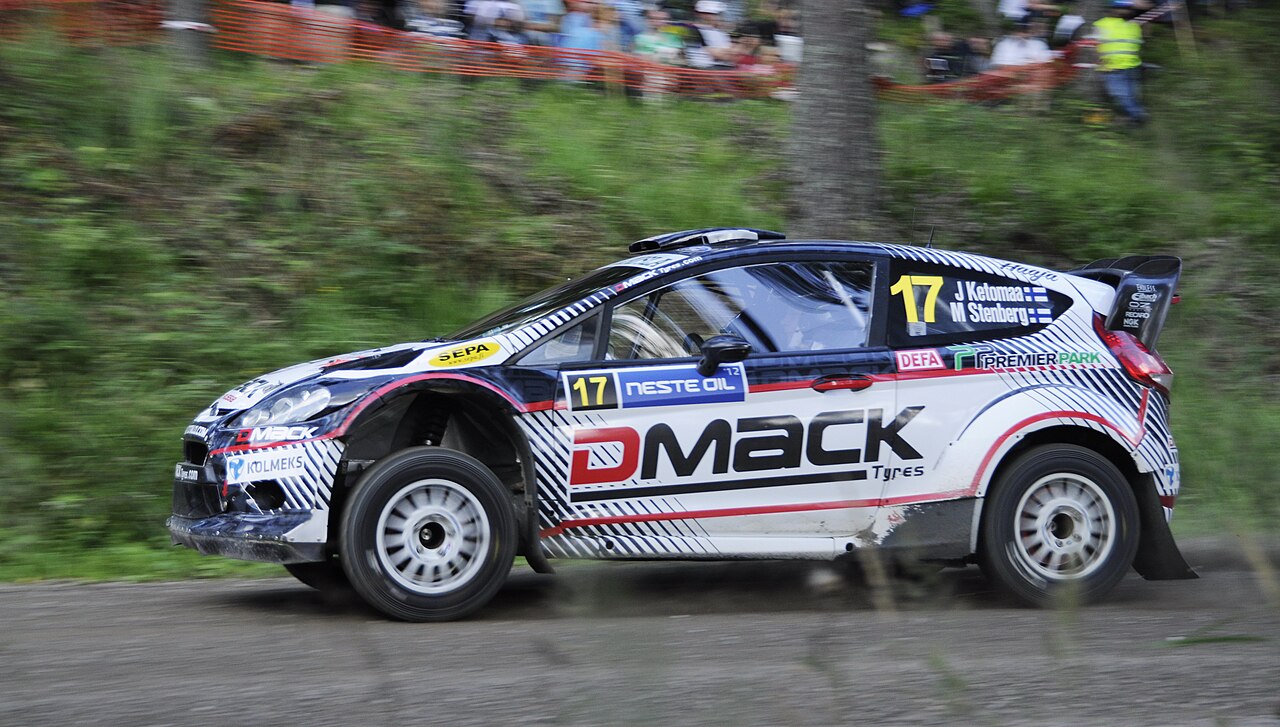
Small car, giant heart: the Fiesta RS WRC that fought the giants of the mid-2010s.

smerikal · CC BY-SA 2.0
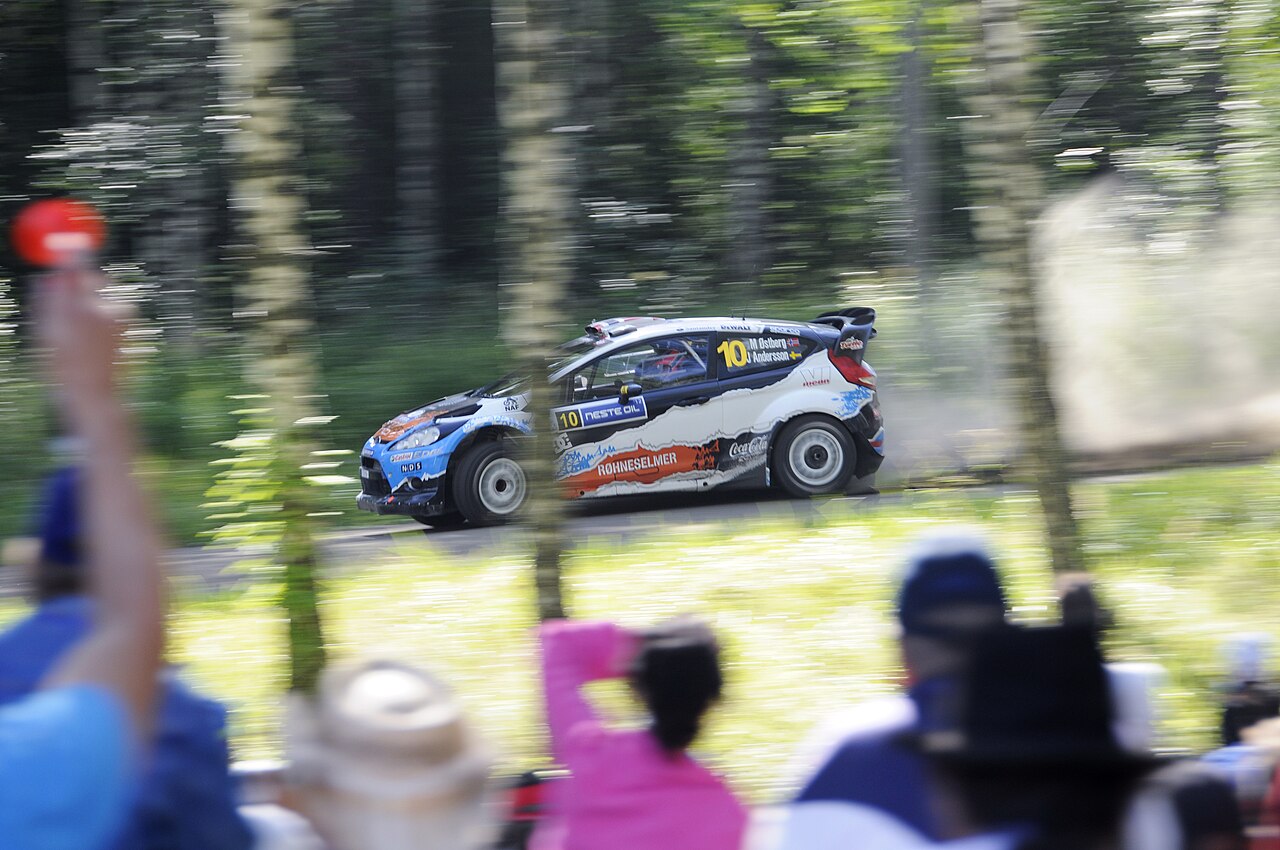
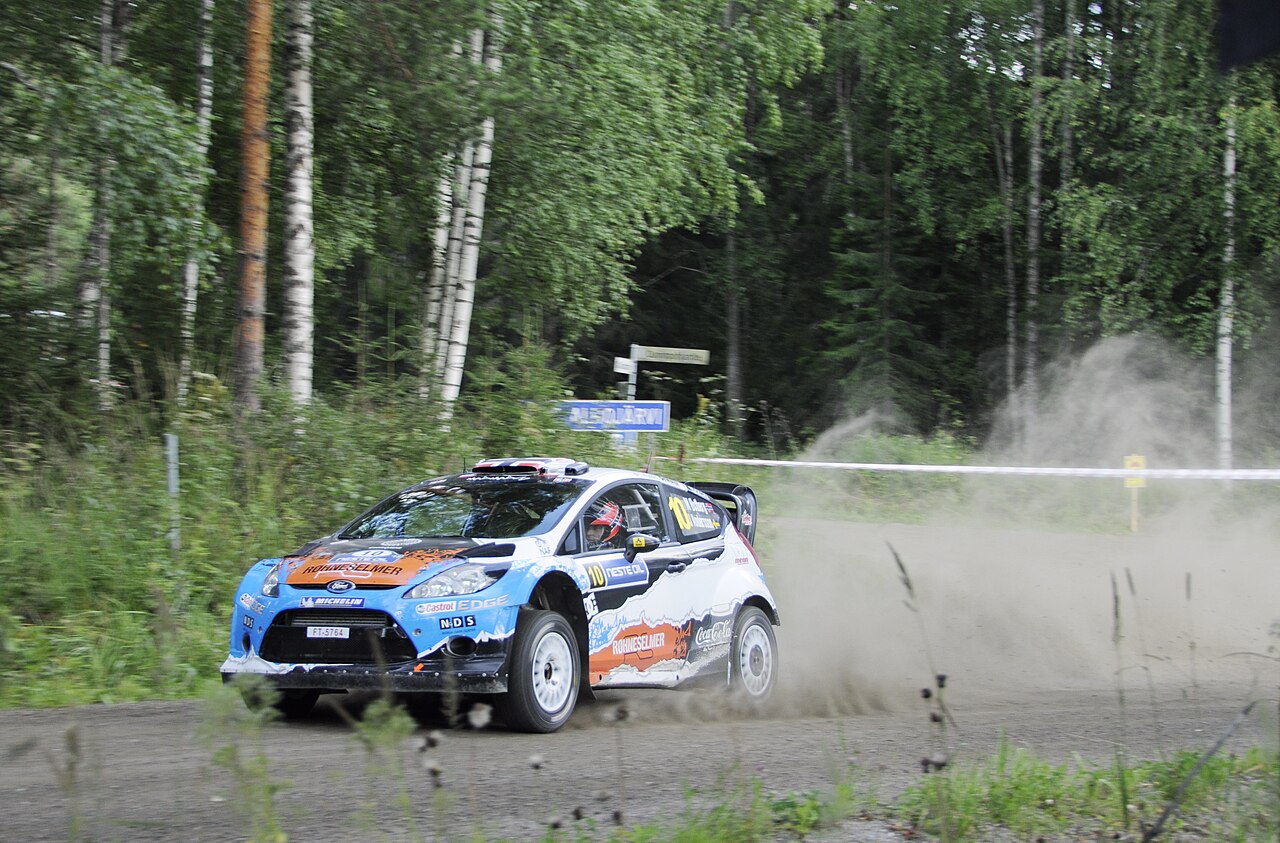
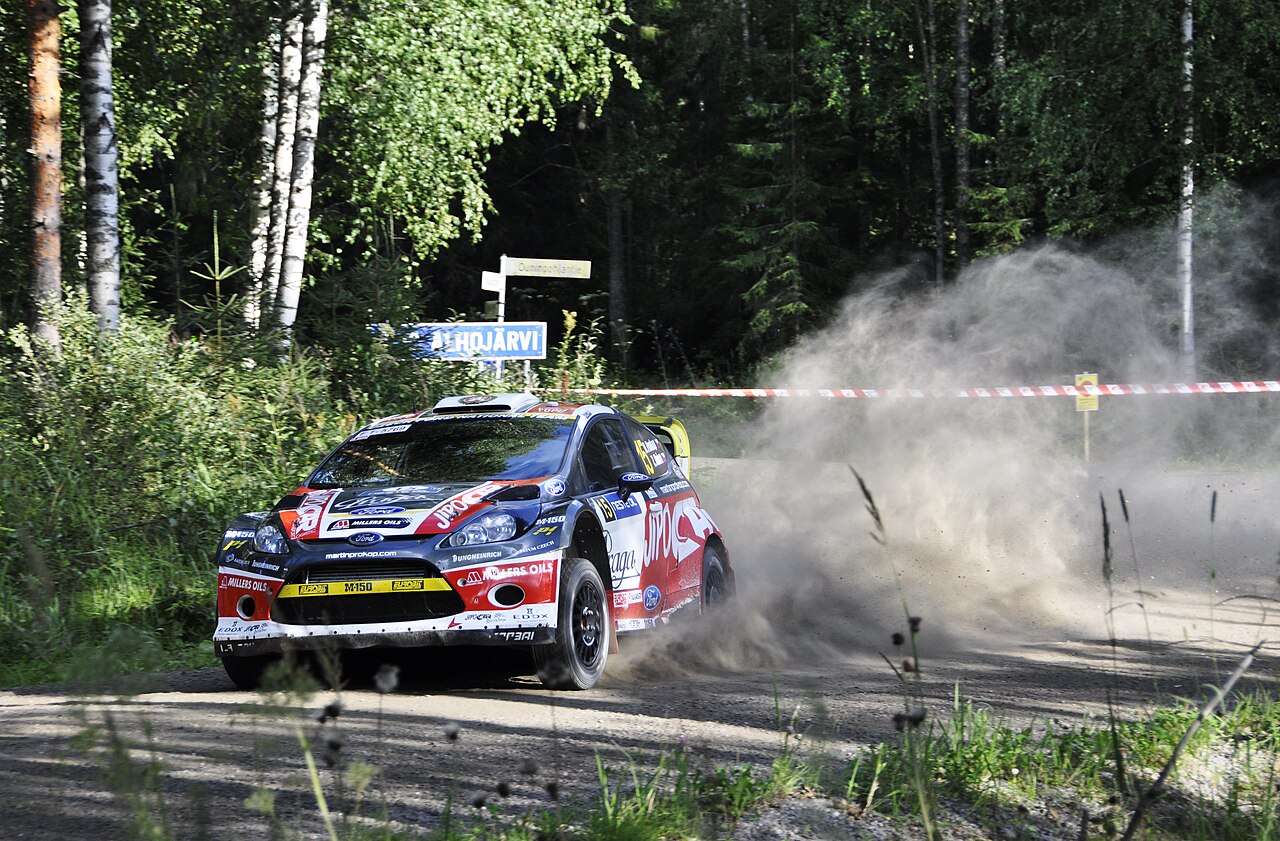
The Ford Fiesta RS WRC was the World Rally Car fielded by Ford's factory programme from 2011 through 2016, developed and campaigned by the British privateer-turned-factory team M-Sport. Born in the 1.6-litre turbocharged regulation era, the Fiesta RS WRC was a compact, four-wheel-drive rally machine that quickly established itself as a benchmark for agility and driver confidence. Its small dimensions, precise chassis balance, and the relentless development pace of the M-Sport operation made it one of the most respected WRC cars of its generation. While it never secured a World Drivers' Championship, the Fiesta RS WRC collected no Manufacturers' titles and became a fan favourite for its nimble handling and underdog spirit. It was not Ford's last purpose-built World Rally Car—Ford later fielded the Ford Fiesta WRC (2017–2021) and the Ford Puma Rally1 (2022–present), both built by M-Sport—but its legacy as a car that punched above its weight is secure in the sport's history.
- WRC Manufacturers' Titles
- 0 (the 2012 title was won by Citroën)
Lore & Background
When Ford introduced the Fiesta RS WRC in 2011, it marked a new chapter for the brand in the World Rally Championship. The M-Sport team, led by Malcolm Wilson and his engineers, built a car around agility, mechanical grip, and driver confidence rather than raw straight-line power. In an era where the Citroën DS3 WRC and the Volkswagen Polo R WRC brought different philosophies to the grid, the Fiesta's compact wheelbase and low overall mass gave it a nimbleness on tight forest stages that larger rivals simply could not replicate. The car's competitive peak arrived in the hands of Jari-Matti Latvala and Mikko Hirvonen, who pushed the Fiesta to multiple rally wins and close championship battles. However, the drivers' titles during this period belonged to Sébastien Ogier and Volkswagen, who dominated from 2013 to 2016. The Fiesta RS WRC's golden period was defined by its consistency and adaptability, rewarding a wide range of driving styles rather than a single superstar. By 2016, with the regulation landscape shifting and Ford's investment horizon narrowing, the programme wound down. Yet the car's reputation endures: in the paddock, in the fan community, and in the record books, the Fiesta RS WRC is remembered as the car that brought fierce competition to the mid-2010s WRC without ever claiming the ultimate drivers' prize.
In Their Own Story
The gravel spray hit the windscreen in a fine, constant hiss. Ogier held the wheel with two fingers, eyes flicking between the next crest, the co-driver's pace notes, and the rear-view mirror where the Citroën was half a second back. The Fiesta's rear end stepped out on the left-hand bend, just enough, and he counter-steered with a flick of the wrist that would have looked casual from the grandstand. The 1.6 turbo spooled, the four-wheel-drive system distributing torque to the outside wheels, and the car planted itself into the exit with a mechanical finality that felt less like driving and more like the car was completing his thought. Somewhere behind, the forest swallowed the sound of the engine. Ahead, the next stage was already loading in his head, one second at a time.
Reader's Guide
The Ford Fiesta RS WRC defined the 2011–2016 WRC era as the car to beat. Developed by M-Sport under Ford's factory backing, it entered the 1.6-litre turbocharged regulation with a philosophy of compactness and balance that contrasted sharply with the larger, more muscular rivals on the grid. Its relatively short wheelbase and low mass made it exceptionally agile on the tight, technical forest stages of Scandinavia and the UK, while the M-Sport chassis setup gave it a mechanical-grip character that rewarded smooth, committed driving. The car was not the fastest in a straight line, but it was the hardest to shake loose, and that balance proved decisive over a full season. Sébastien Ogier and Jari-Matti Latvala were the headline names, with Ogier claiming three of the four drivers' titles and Latvala the fourth. Matti Hyvönen, Henning Solberg, and later Elfyn Evans and Mads Østberg rounded out a deep driver lineup that kept the car on the podium across multiple surfaces. The Fiesta RS WRC defined its period because it did not simply win races; it set the standard. Every rival team measured their progress against Ford's pace, and the M-Sport operation's relentless mid-season development meant the car was still evolving in its final year. When Ford withdrew after 2016, the gap it left in the top tier felt immediate, a reminder that the small blue car had been the axis around which the championship turned.
Did You Know?
- The Fiesta RS WRC debuted in 2011, directly succeeding the Ford Focus WRC, which competed through 2010—so there was no gap in Ford's top-tier WRC presence.
- Sébastien Ogier never drove the Fiesta RS WRC in a WRC event; his four consecutive WRC titles (2013–2016) were all won with Volkswagen, not with Ford or M-Sport.
- The Fiesta RS WRC's compact dimensions made it noticeably smaller than rivals like the Citroën DS3 WRC and Volkswagen Polo R WRC, giving it a short-wheelbase agility advantage on tight stages.
Engineering Foundation & Regulatory Context
The Ford Fiesta RS WRC emerged as the successor to the long-running Ford Focus RS WRC, which had been competing in various guises since 1999. Built by Ford Europe in partnership with M-Sport for the Ford World Rally Team, this car was designed to meet the all-new 2011 World Rally Car regulations. Those rules were derived from the existing Super 2000 framework but introduced a significant powertrain shift: instead of the naturally aspirated two-litre engines that defined S2000 competition, the WRC cars were mandated to use a turbocharged 1.6-litre unit. Ford's solution was the EcoBoost engine, a compact forced-induction powerplant that gave the Fiesta RS WRC its distinctive character. The project was not built from scratch in isolation; rather, M-Sport and Ford first introduced a Super 2000 version of the Fiesta at the start of 2010, and that road-car-derived platform became the structural and mechanical foundation upon which the full WRC machine was constructed. The result was a car that carried the familiar Fiesta nameplate into a new regulatory era while retaining the compact, agile proportions that made the original road car so popular.
Development Testing & Team Involvement
Before the Fiesta RS WRC ever appeared on a WRC start line, it underwent extensive shakedown and refinement work throughout 2010. The Stobart Ford World Rally Team entrusted the bulk of this development driving to two experienced campaign drivers: Matthew Wilson and Henning Solberg. Their role was to push the car through its paces, identify handling weaknesses, and feed feedback back to the M-Sport engineering team so that the car could be dialed in before its competitive debut. The development effort was not limited to those two drivers alone. Per-Gunnar Andersson, a seasoned rally competitor, also spent time behind the wheel, as did Malcolm Wilson, who held the dual roles of M-Sport managing director and Ford team director. Having the team's leadership personally involved in the testing process underscored how critical this project was to Ford's rally ambitions. The 2010 development campaign was essentially a bridge between the S2000 Fiesta that had been launched at the beginning of that year and the full WRC specification that would follow, ensuring that the underlying chassis and drivetrain were thoroughly understood before the turbocharged EcoBoost engine and WRC-specific components were layered on top.
The 2015 Evolution Update
The Fiesta RS WRC was not a static machine over its competitive life. At Rally Finland in 2014, M-Sport unveiled a facelifted version of the car, most visibly altering the front-end styling. However, that update was largely cosmetic; the mechanicals under the bonnet remained unchanged from the original specification. The more substantial technical overhaul came before Rally Portugal in 2015, when M-Sport introduced the so-called 'Evolution' specification. The most significant change was in the powerplant itself: whereas the original car's 1.6-litre turbo engine had been built by Pipo Motors, the Evolution version featured an engine constructed entirely by M-Sport, with technical support provided by Ford. Beyond the engine, the Evolution car received a comprehensive redesign of everything beneath the bonnet. This included further developments to the cooling package, the transmission, the electronics, the wiring harness, and the differentials. The result was a meaningfully updated machine that carried the Fiesta RS WRC name into its final competitive season before being succeeded in 2017.
RRC Variant & Life Beyond the Factory
In 2012, the Fiesta RS WRC received a sibling variant tailored to the FIA's regional rally championship rules. The RRC-specification car was, in essence, the same Fiesta RS WRC chassis with a handful of targeted modifications: it adopted an S2000-specification rear wing, a slightly different front bumper, a lighter flywheel, and a 30mm engine restrictor in place of the 33mm unit fitted to the WRC version. These changes were deliberately minimal, and M-Sport designed the car so that an RRC-specification Fiesta could be converted back to full WRC specification in just six hours, giving teams the flexibility to compete across both categories with a single car. The Fiesta RS WRC's competitive era officially ended in 2017, when it was replaced by the next-generation Ford Fiesta WRC. Yet the car's life did not conclude on the factory team's garage floor. Private owners and independent teams continued to enter the Fiesta RS WRC in rally competitions well after its factory retirement, keeping the compact Ford rally car on the start lines long after its official WRC campaign had drawn to a close.
Gallery
Frequently Asked Questions
What is the Ford Fiesta RS WRC?
It is the World Rally Car that Ford entered into the top tier of rallying from 2011 through 2016, built around a 1.6-litre turbocharged engine, four-wheel drive, and a sequential gearbox. The car was developed and campaigned by the British team M-Sport, which served as Ford's factory operation during that stretch.
Which drivers are most associated with the Ford Fiesta RS WRC?
Sébastien Ogier and Jari-Matti Latvala anchored the factory line-up, while Matti Hyvönen and Henning Solberg also piloted the car in various seasons. Together, Ogier and Latvala claimed four WRC Drivers' Championships in the Fiesta.
How many World Rally Championships did the Ford Fiesta RS WRC win?
Across its six-season competitive life the Fiesta RS WRC delivered four Drivers' Titles: three for Ogier and one for Latvala. That tally made it one of the most successful single WRC entries of the 1.6 turbo era.
Why do fans regard the Ford Fiesta RS WRC as the benchmark car of its generation?
Its short, compact dimensions and finely balanced chassis gave it remarkable agility on both tight gravel and fast tarmac stages, and M-Sport's relentless development pace kept it ahead of rivals season after season. Many fans simply call it the most complete WRC car of the mid-2010s.
What happened to the Ford Fiesta RS WRC after 2016?
Ford withdrew its factory programme from the WRC at the close of the 2016 season, bringing the Fiesta RS WRC's competitive career to an end. It remains the last factory Ford entry in the top tier of rallying for a long stretch, cementing its status as a small car with a giant legacy.
More in Cars & Manufacturers
Elsewhere in the World Rally Championship universe
Spotted an error? Know more?
This is a living reference — every entry is fact-audited, and reader corrections feed straight into our audit queue. Suggest an edit · See this site's audit record